

 Raja Hamza Asghar
AIW Strategy helps me to rank my blog on Google very fast. In this technique, I target new keywords because, according to Google, 15% of Google searches come from new keywords. So that means every day we have a chance to get new keywords.
After reading this, I was curious about how to find new searches. Then, with a lot of practice, I found this technique. It has an accuracy of more than 90%, and I have ranked many of my blogs with the help of this technique.

What is AIW Strategy?
AIW strategy is a tested method that I use to find keywords for my blog sites. This strategy helps me to rank my keywords fast compared to those keywords that I pick from SEO tools. Also, the advantage of using this strategy is that you will find untapped keywords that rank on Google easily with quality content.
Key Components of AIW
AIW Strategy has three components that we consider to find keywords.
- Allintitle
- Inverted Comma
- Weak Sites
These are the meanings of AIW. Don’t be confused, I will tell you what these metrics are and how to use them. Allintitle and inverted commas ( “ ” ) are advanced search operators for Google, which we can use to get specific data, and weak sites are those sites that have less than 10 DA.
Step-by-Step Guide for AIW Strategy
I hope you understand the meaning of AIW. Now let’s discuss the steps that you need to follow for this strategy.
- Install Keyword Surfer
- Search Your Topic
- Pick Long-Tail Keywords
- Validate Keywords Using Allintitle
- Check with Inverted Commas (“ ”)
- Analyze Weak Sites
These are the 6 steps that will lead you to your low-competition keywords. Now let’s discuss these steps with an example.
1. Install Keyword Surfer
First, you need to add a free extension to your browser called Keyword Surfer, which provides you with the search volume of keywords in Google, although I do not consider these tools’ search volume accurate.
Because the search volume and other metrics that every tool provides us with are estimations. These are not very accurate, and especially these tools do not provide you with the search volume of new keywords.
But I recommend you add this tool because sometimes we randomly search for something and find some hidden keywords.
2. Search Your Topic to Find Keywords
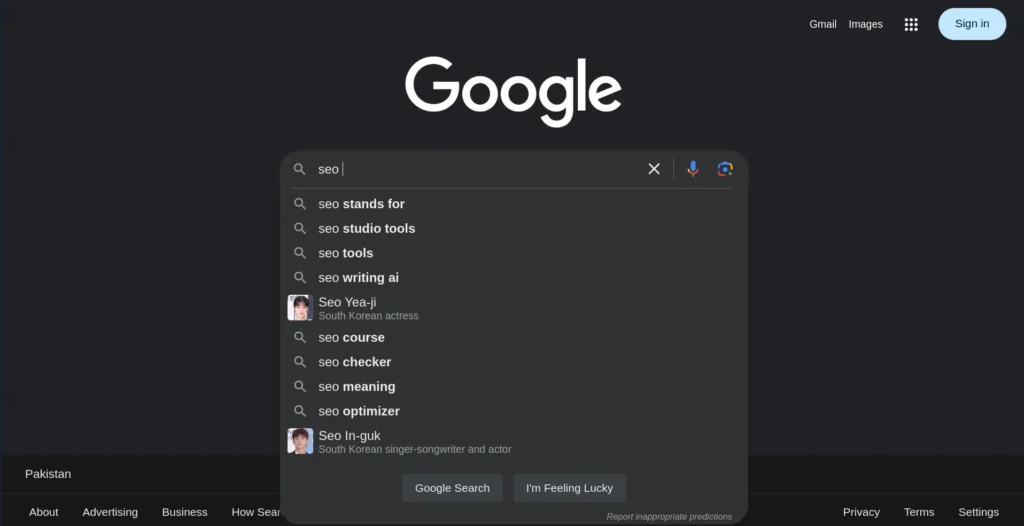
After adding this extension, open Google.com and search for your topic. But keep in mind to open the Google of the country where you want to rank your blog. For example, for this guide, I picked the keyword “SEO” and my target country is Pakistan.
After searching, I see Google shows me some keyword suggestions for my topic. Someone searched for these keywords, that’s why Google suggested them to me.
3. Pick Long-Tail Keywords
After seeing the suggestions, you need to pick the long-tail keywords because the AIW strategy works more accurately on long-tail keywords.
Sometimes when you search for broad topics, Google does not show you long-tail keyword suggestions.
At that time you need to add some relevant sub-topics or words. Like, I use the word “For”, which I add after SEO, and then Google shows some long-tail keyword suggestions. Now I pick the keyword “SEO for ecommerce websites”.
4. Use Allintitle to Validate Keywords
After finding your desired keyword, put ( allintitle: ) before your keyword and search on Google. Google now hides the number of results, so click the Tools button under the search bar to see it. Now check if your keyword has less than 10 results on allintitle. If it does, that means this keyword has a chance to rank.
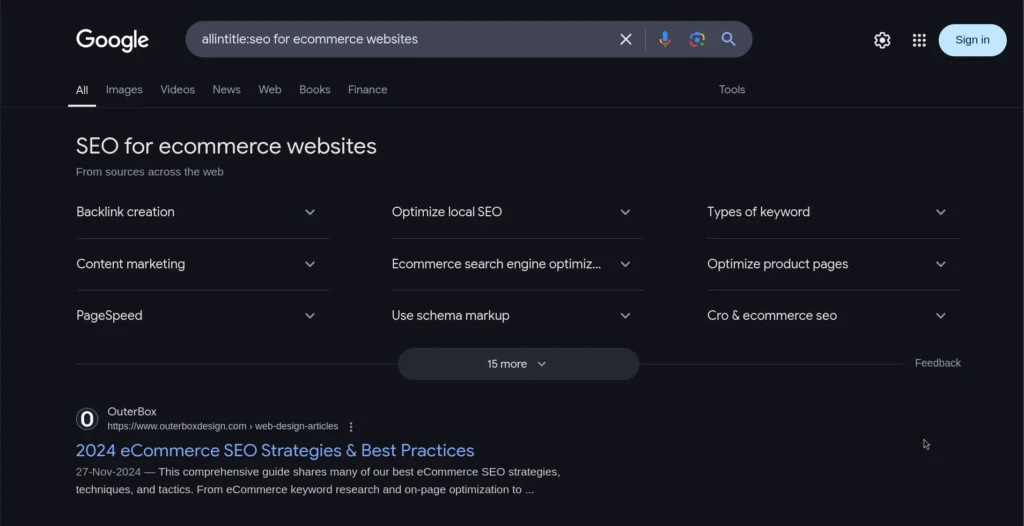
After adding allintitle, I found 228 results for this keyword. That does not meet my first requirement (less than 10 results), so I did more research to find keywords that have less than 10 allintitle results.
There are some places that you need to check to pick keywords from Google.
- Google suggestions
- People Also Search For section ( Last Suggestions )
- People Also Ask section
- Keyword Surfer suggestions
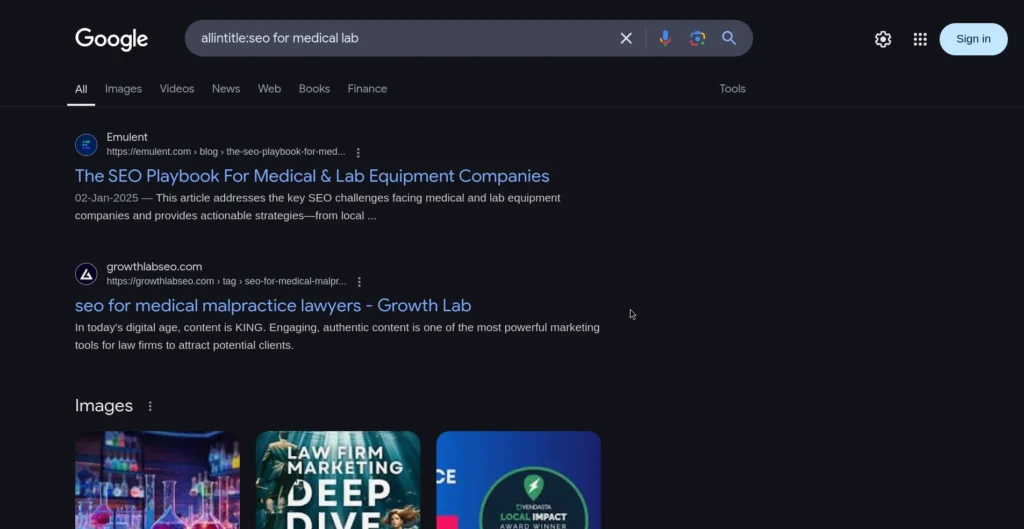
After picking my keyword “SEO for Medical lab”, when I put allintitle I saw 02 results, which fulfilled my first requirement.
Why Do Less Than 10 Results of Allintitle Indicate Low Competition?
When we search something with allintitle, it tells Google to show only those pages that use this same keyword in the title. So when we find less than 10 results, it tells us that less than 10 websites have written on it. Also, most of the time the results that you get are from social sites, forums, or weak sites.
5. Validate Keywords More with Inverted Commas
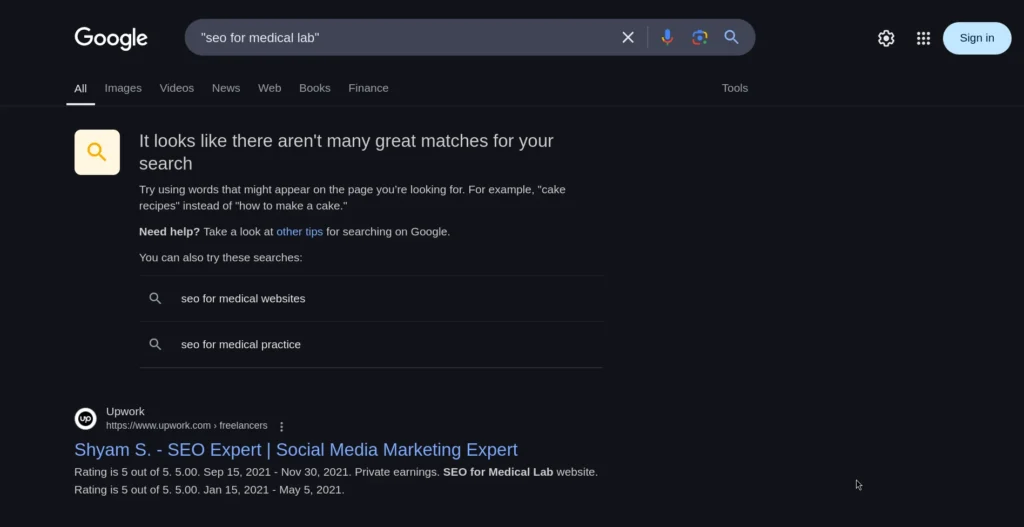
The second step that you need to do (after finding allintitle less than 10) is to put an inverted comma at the start and end of the keyword, then search again. If you see less than 99 results for the same keyword, that means your keyword has the potential to gain a top ranking in the SERP.
In my case, Google showed me “It looks like there aren’t many great matches for your search”, which means I found a keyword that has the potential to rank based on the results that we found.
6. Check Weak Sites
The last metric that we need to check is weak sites. It’s a very simple process. Search your keyword on Google without allintitle and inverted commas, and see if you find weak sites ranking on Google.
If you do, then the last metric is fulfilled. But you need to implement this when you find results in inverted commas.
In my case, Google does not have matching results, so I don’t check the weak sites. My experience indicates that if I write quality content on this topic, the chances are high I will rank on this keyword without off-page and other efforts.
How to Check Weak Sites
Those sites that have less than 10 DA, I call them weak sites. You can easily beat them in Google rankings with high-quality content. For checking DA, there are a lot of extensions like (Ahrefs bar, Ubersuggest bar and Moz bar). You just need to add one and you are good to go, you will find the DA of sites.